

The Hedgehog signaling pathway is a crucial and highly conserved signaling cascade that plays fundamental roles in embryonic development, tissue homeostasis, and regeneration. It has also been implicated in various diseases, including cancer. Understanding the intermediates in this pathway is essential for both basic research and the development of therapeutic strategies. As an intermediates supplier, we are deeply involved in providing key compounds that are integral to the study and manipulation of the Hedgehog signaling pathway.
Overview of the Hedgehog Signaling Pathway
The Hedgehog signaling pathway was first discovered in Drosophila melanogaster, where mutations in the hedgehog gene led to abnormal segment patterning in the embryo, resembling a hedgehog. In vertebrates, there are three Hedgehog ligands: Sonic Hedgehog (Shh), Indian Hedgehog (Ihh), and Desert Hedgehog (Dhh). These ligands bind to the transmembrane receptor Patched (Ptch), which in the absence of ligand, inhibits the activity of another transmembrane protein, Smoothened (Smo). When Hedgehog ligands bind to Ptch, the inhibition of Smo is relieved, allowing Smo to transduce the signal intracellularly.
Intermediates in the Hedgehog Signaling Pathway
Cholesterol Modification of Hedgehog Ligands
One of the key steps in the Hedgehog signaling pathway is the cholesterol modification of Hedgehog ligands. After synthesis, Hedgehog proteins undergo autocatalytic cleavage, resulting in the formation of an N - terminal signaling domain and a C - terminal domain. The N - terminal domain is then covalently modified by cholesterol at its C - terminus. This cholesterol modification is essential for the proper secretion and signaling activity of Hedgehog ligands.
Cholesterol - modified Hedgehog ligands are more hydrophobic and tend to associate with the cell membrane. This association is important for the formation of Hedgehog gradients, which are critical for proper tissue patterning during development. At our company, we supply various cholesterol - related intermediates that can be used in the study of this modification process. These intermediates can help researchers understand how cholesterol affects the secretion, diffusion, and binding of Hedgehog ligands to their receptors.
Patched and Smoothened Interactions
Patched and Smoothened are two important membrane - bound intermediates in the Hedgehog signaling pathway. Patched is a 12 - transmembrane protein that acts as the receptor for Hedgehog ligands. In the absence of Hedgehog ligands, Patched inhibits the activity of Smoothened, a 7 - transmembrane protein similar to G - protein - coupled receptors.
The exact mechanism by which Patched inhibits Smo is still not fully understood. It is hypothesized that Patched may regulate the intracellular levels of certain small molecules or lipids that are required for Smo activation. When Hedgehog ligands bind to Patched, this inhibitory effect is removed, and Smo is activated.
To study the interactions between Patched and Smoothened, researchers often need specific chemical compounds. We offer a range of intermediates that can be used to modulate the activity of these proteins. For example, Salcaprozate Sodium, CAS: 203787 - 91 - 1, C15H22NNaO4 has been shown to have potential in influencing membrane - protein interactions and could be used in the study of Patched - Smoothened signaling.
Intracellular Signaling Components
Once Smo is activated, it initiates a series of intracellular signaling events. One of the key downstream effectors is the Gli family of transcription factors (Gli1, Gli2, and Gli3). In the absence of Hedgehog signaling, Gli proteins are proteolytically processed into truncated repressor forms. When the pathway is activated, the processing of Gli proteins is inhibited, and full - length Gli proteins act as transcriptional activators, regulating the expression of target genes.
There are many intermediates involved in the regulation of Gli protein processing and activity. For instance, some kinases and phosphatases play important roles in modulating the phosphorylation status of Gli proteins. We supply intermediates that can be used to study these post - translational modifications. 99% Purity 2 - Imidazolidone, Ethylene Urea Powder, CAS: 120 - 93 - 4 can be used in biochemical assays to study the enzymatic reactions involved in Gli protein regulation.
Role of Cyclodextrins in Hedgehog Signaling
Cyclodextrins are cyclic oligosaccharides that can form inclusion complexes with hydrophobic molecules. In the context of the Hedgehog signaling pathway, cyclodextrins have been shown to affect the solubility and activity of Hedgehog ligands. They can bind to cholesterol - modified Hedgehog ligands and potentially modulate their diffusion and signaling properties.
We offer Alpha Cyclodextrin, CAS:10016 - 20 - 3, C36H60O30, which can be used in in vitro and in vivo studies to investigate how cyclodextrins interact with Hedgehog ligands and influence the Hedgehog signaling pathway. By using these cyclodextrins, researchers can gain a better understanding of the role of ligand solubility and transport in the signaling process.
Importance of Intermediates in Therapeutic Development
The Hedgehog signaling pathway is frequently dysregulated in various diseases, especially cancer. Aberrant activation of the pathway can lead to uncontrolled cell proliferation, survival, and metastasis. Therefore, targeting the intermediates in the Hedgehog signaling pathway has emerged as a promising therapeutic strategy.
For example, inhibitors of Smoothened have been developed as anti - cancer drugs. By blocking Smo activity, these inhibitors can prevent the activation of the downstream signaling cascade and inhibit tumor growth. However, the development of such drugs requires a deep understanding of the intermediates in the pathway. Our company's supply of high - quality intermediates can support researchers in their efforts to develop more effective and specific therapeutic agents.
Contact Us for Procurement
If you are a researcher or a pharmaceutical company interested in studying the Hedgehog signaling pathway or developing related therapies, we are here to provide you with the necessary intermediates. Our products are of high quality and are carefully tested to ensure their purity and reliability. We understand the importance of these intermediates in scientific research and drug development, and we are committed to providing excellent customer service.
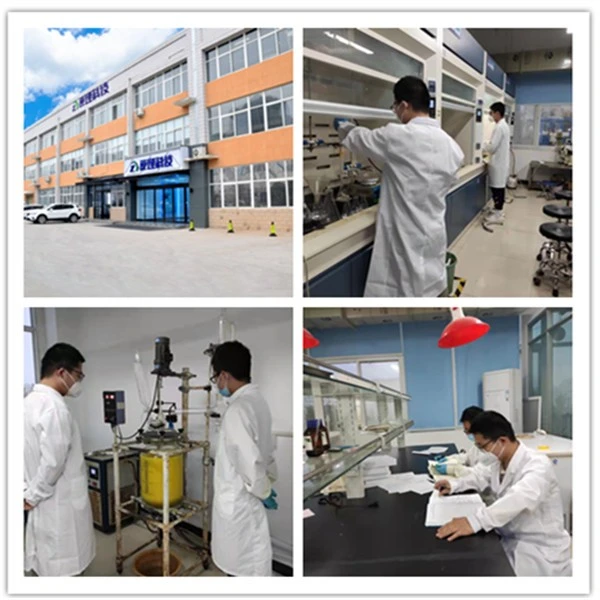

Please feel free to contact us for more information about our products and to discuss your specific procurement needs. We look forward to collaborating with you in advancing the understanding and application of the Hedgehog signaling pathway.
References
- Ingham, P. W., & McMahon, A. P. (2001). Hedgehog signaling in animal development: paradigms and principles. Genes & Development, 15(23), 3059 - 3087.
- Taipale, J., & Beachy, P. A. (2001). The Hedgehog and Wnt signaling pathways in cancer. Nature, 411(6835), 349 - 354.
- Huangfu, D., & Anderson, K. V. (2006). Understanding the mechanisms of Hedgehog signaling from the Drosophila and vertebrate models. Development, 133(1), 3 - 14.