

As a supplier of Na₂B₁₀H₁₀, I often receive inquiries from researchers and industry professionals about the reaction conditions for Na₂B₁₀H₁₀ to react with metal nitrates. In this blog post, I will delve into the details of these reaction conditions, including the factors that influence the reactions, and provide some insights based on our experience in the field.
General Overview of the Reaction between Na₂B₁₀H₁₀ and Metal Nitrates
The reaction between Na₂B₁₀H₁₀ and metal nitrates is a complex chemical process that can lead to the formation of various metal - boron cluster compounds. These compounds have attracted significant attention due to their unique structures and potential applications in areas such as catalysis, materials science, and medicine.
The general reaction can be represented as follows:
[Na_{2}B_{10}H_{10}+M(NO_{3})_{n}\rightarrow Products]
where (M) is a metal ion and (n) is its valence.
Reaction Conditions
Solvent
The choice of solvent is crucial in the reaction between Na₂B₁₀H₁₀ and metal nitrates. Polar solvents such as water, ethanol, and acetonitrile are commonly used. Water is a popular choice because it can dissolve both Na₂B₁₀H₁₀ and many metal nitrates. However, it should be noted that in some cases, water may participate in side - reactions, especially if the metal ions are sensitive to hydrolysis.
Ethanol is another suitable solvent. It has a relatively low dielectric constant compared to water, which can affect the solubility of the reactants and the reaction kinetics. Acetonitrile is often preferred when anhydrous conditions are required. It can dissolve a wide range of metal nitrates and is less likely to cause hydrolysis of the metal ions.
Temperature
Temperature plays a significant role in the reaction. Generally, an increase in temperature can accelerate the reaction rate. However, if the temperature is too high, it may lead to the decomposition of Na₂B₁₀H₁₀ or the metal nitrates. For most reactions between Na₂B₁₀H₁₀ and metal nitrates, the temperature range is usually from room temperature (around 25°C) to 80°C.
At room temperature, the reaction may proceed slowly, but it can be beneficial for controlling the reaction and obtaining pure products. Higher temperatures can be used to speed up the reaction, but careful monitoring is required to prevent unwanted side - reactions.
pH
The pH of the reaction medium can also influence the reaction. In some cases, the reaction may be more favorable under acidic conditions, while in others, basic conditions may be required. For example, if the metal ion forms insoluble hydroxides under basic conditions, the reaction should be carried out in an acidic or neutral medium.
To adjust the pH, acids such as hydrochloric acid or bases such as sodium hydroxide can be used. However, it is important to ensure that the added acid or base does not react with the reactants or products.
Stoichiometry
The stoichiometry of the reactants is a critical factor. The ratio of Na₂B₁₀H₁₀ to the metal nitrate can determine the composition and structure of the final products. In some cases, a stoichiometric ratio of 1:1 may be used, but in other cases, an excess of one of the reactants may be required to drive the reaction to completion.
For example, if the metal nitrate has a low reactivity, an excess of Na₂B₁₀H₁₀ may be used to ensure that all the metal nitrate reacts. On the other hand, if the metal nitrate is expensive or difficult to handle, a stoichiometric or slightly less than stoichiometric amount of Na₂B₁₀H₁₀ may be used.
Influence of Metal Ions
Different metal ions can have different reactivities towards Na₂B₁₀H₁₀. Transition metal ions such as copper, iron, and cobalt often form complexes with Na₂B₁₀H₁₀. These complexes can have different structures and properties depending on the coordination number and geometry of the metal ion.
For example, copper(II) nitrate can react with Na₂B₁₀H₁₀ to form copper - boron cluster compounds. The reaction conditions for this reaction may be different from those for a reaction with a main - group metal nitrate such as sodium nitrate.
Main - group metal nitrates, such as those of alkali metals and alkaline earth metals, may have different reaction mechanisms compared to transition metal nitrates. In some cases, they may form simple salts or coordination compounds with Na₂B₁₀H₁₀.
Examples of Related Boron Cluster Compounds
There are many interesting boron cluster compounds that are related to the reaction between Na₂B₁₀H₁₀ and metal nitrates. Some of these compounds have unique structures and potential applications.
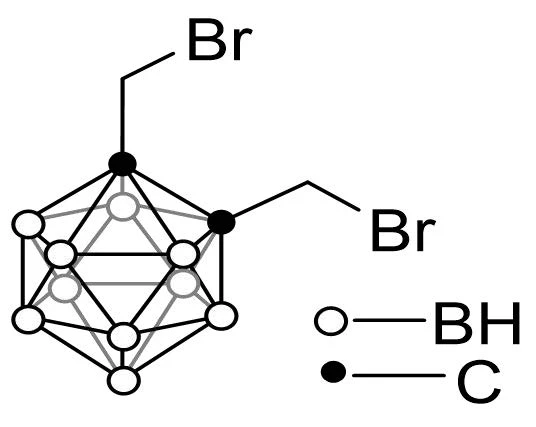
- 1,2 - Dibromomethyl - 1,2 - dicarbacloso - dodecaborane, C₄H₄B₁₀Br₂, 17786 - 09 - 3: This compound has a cage - like structure and can be used in materials science and organic synthesis.
- Dodecahydro - arachno - bis - (acatonitrile) Decaborane, C₄B₁₀H₁₈N₂, 28377 - 97 - 1: It has a unique electronic structure and may have potential applications in catalysis.
- P - Carborane Dicarboxylic Acid, 23087 - 99 - 2, C₄H₂B₁₀O₄: This compound can be used in the synthesis of functional materials and pharmaceutical intermediates.
Applications of the Reaction Products
The products of the reaction between Na₂B₁₀H₁₀ and metal nitrates have a wide range of applications.
In catalysis, metal - boron cluster compounds can act as catalysts for various chemical reactions. Their unique structures and electronic properties can provide active sites for the reaction, leading to high catalytic activity and selectivity.
In materials science, these compounds can be used to prepare advanced materials such as sensors, semiconductors, and magnetic materials. The incorporation of boron clusters can improve the mechanical, electrical, and magnetic properties of the materials.
In medicine, some metal - boron cluster compounds have shown potential as boron carriers for boron neutron capture therapy (BNCT). BNCT is a promising cancer treatment method that uses boron - containing compounds to selectively deliver boron to cancer cells and then irradiate them with neutrons.
Conclusion
The reaction between Na₂B₁₀H₁₀ and metal nitrates is a complex process that is influenced by various factors such as solvent, temperature, pH, and stoichiometry. Understanding these reaction conditions is crucial for obtaining the desired products with high purity and yield.
As a supplier of Na₂B₁₀H₁₀, we are committed to providing high - quality products and technical support to our customers. If you are interested in using Na₂B₁₀H₁₀ for your research or industrial applications, please feel free to contact us for more information and to discuss your specific requirements. We look forward to working with you to explore the potential of Na₂B₁₀H₁₀ in various fields.
References
- Hawthorne, M. F. et al. "The Chemistry of Boron Cluster Compounds." Chemical Reviews, 1993, 93(3), 1021 - 1042.
- Mingos, D. M. P. "The Structures and Bonding in Boron Cluster Compounds." Journal of Chemical Education, 1974, 51(10), 643 - 647.
- Grimes, R. N. "Carboranes." Academic Press, 1970.