

What are the products when Na2B10H10 reacts with metal nitrides?
As a supplier of Na2B10H10, I've been deeply involved in the fascinating world of boron - cluster compounds. These compounds have unique chemical and physical properties, making them highly sought - after in various industries, from materials science to energy storage. One of the most intriguing aspects is the reaction between Na2B10H10 and metal nitrides. In this blog, we'll explore the possible products of this reaction and understand its significance.
Understanding Na2B10H10
Na2B10H10, or disodium decaborane, is a well - known boron - hydrogen compound. The structure of B10H10²⁻ anion consists of a three - dimensional cage - like structure, which gives it special stability and reactivity. The sodium cations are associated with the negatively charged B10H10²⁻ anion to form a stable salt. The boron - hydrogen bonds in Na2B10H10 are relatively reactive, and this reactivity can be harnessed in chemical reactions with other compounds, such as metal nitrides.
Metal Nitrides: An Overview
Metal nitrides are compounds composed of a metal and nitrogen. They have a wide range of properties depending on the metal involved. For example, some metal nitrides are hard and have high melting points, making them suitable for use in cutting tools and wear - resistant coatings. Others have interesting electronic properties, which can be exploited in semiconductor applications. Common metal nitrides include lithium nitride (Li3N), magnesium nitride (Mg3N2), and titanium nitride (TiN).
Possible Reactions and Products
1. Formation of Boron - Nitrogen Compounds
When Na2B10H10 reacts with metal nitrides, one of the possible outcomes is the formation of boron - nitrogen compounds. The nitrogen atoms from the metal nitride can react with the boron atoms in Na2B10H10. For instance, if we consider the reaction with lithium nitride (Li3N), the nitrogen atoms may replace some of the hydrogen atoms in the B10H10²⁻ cage. This could lead to the formation of compounds with B - N bonds, such as B10HxN(10 - x)²⁻ anions, where x < 10. These boron - nitrogen compounds are of great interest because they can have unique electronic and structural properties. Boron - nitrogen compounds are known to have potential applications in areas such as catalysis and high - performance materials.
2. Metal - Boron - Hydrogen Compounds
Another possible product is the formation of metal - boron - hydrogen compounds. The metal from the metal nitride can interact with the B10H10²⁻ anion. For example, in the reaction with magnesium nitride (Mg3N2), magnesium cations may replace the sodium cations in Na2B10H10, forming MgB10H10. These metal - boron - hydrogen compounds can have different stabilities and reactivities compared to the original Na2B10H10. They may also have potential applications in hydrogen storage, as the presence of metal atoms can affect the hydrogen - storage capacity and kinetics.
3. Release of Gaseous Products
During the reaction, gaseous products may also be released. Hydrogen gas (H2) is a likely candidate. The reaction between the hydrogen atoms in Na2B10H10 and the nitrogen or metal in the metal nitride can result in the formation and release of H2. The release of hydrogen gas can be an important aspect, especially in the context of hydrogen - related technologies.
Significance of the Reaction
The reaction between Na2B10H10 and metal nitrides has several implications. From a scientific perspective, it helps us understand the reactivity of boron - cluster compounds and the formation of new chemical bonds. It also provides a way to synthesize novel compounds with potentially useful properties.
In terms of applications, the products of this reaction can find use in various industries. As mentioned earlier, boron - nitrogen compounds can be used in catalysis. They may have unique catalytic activity due to the combination of boron and nitrogen atoms. Metal - boron - hydrogen compounds can be explored for hydrogen storage applications, which are crucial for the development of clean energy technologies.

Related Boron - Cluster Compounds
In our product portfolio, we also offer other interesting boron - cluster compounds, such as 1 - Phenyl - o - carborane, CAS: 16390 - 61 - 7, C8B10H16. This compound has a different structure compared to Na2B10H10, with a carborane cage and a phenyl group. It has potential applications in materials science and organic synthesis.
Another compound is 1 - Formyl - 2 - phenyl - 1,2 - dicarbacloso - dodecaborane,C9H6B10O,12082 - 52 - 9. The presence of the formyl group in this compound makes it reactive and suitable for use in chemical synthesis.
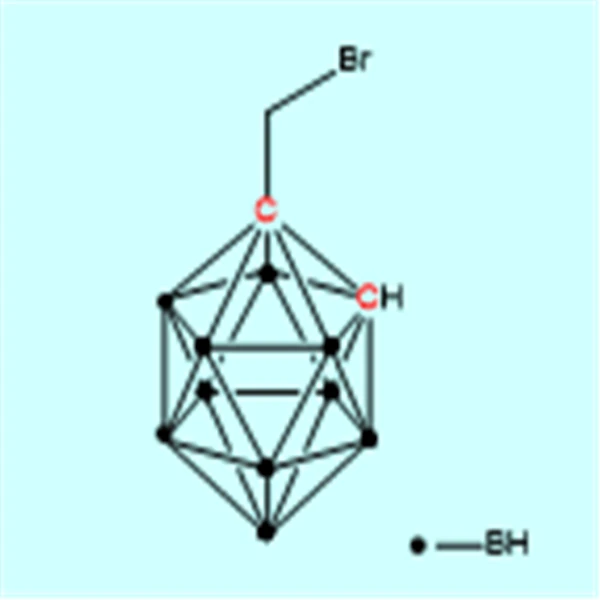
We also supply Top Grade C3H2B10Br, 1 - Bromomethyl - o - carborane,CAS: 19496 - 84 - 5. The bromomethyl group in this compound can be used for further chemical modifications, making it a valuable building block in organic and inorganic synthesis.
Conclusion
The reaction between Na2B10H10 and metal nitrides is a complex and fascinating area of study. The possible products, including boron - nitrogen compounds, metal - boron - hydrogen compounds, and gaseous products, have significant potential in various fields. As a supplier of Na2B10H10, we are committed to providing high - quality products to support research and development in this area. If you are interested in exploring the applications of Na2B10H10 or any of our other boron - cluster compounds, we invite you to contact us for further discussion and potential procurement. We look forward to collaborating with you to unlock the potential of these unique compounds.
References
- Housecroft, C. E., & Sharpe, A. G. (2012). Inorganic Chemistry. Pearson Education.
- Greenwood, N. N., & Earnshaw, A. (1997). Chemistry of the Elements. Butterworth - Heinemann.