

Hey there! As a supplier of Na2B10H10, I often get asked about its magnetic properties. So, I thought I'd take a deep - dive into this topic and share what I've learned over the years.
First off, let's understand what Na2B10H10 is. It's a sodium salt of the decaborane anion. Decaborane is a boron - hydrogen compound with a unique structure. In Na2B10H10, the sodium ions balance the negative charge of the B10H10²⁻ anion.
When it comes to magnetic properties, we need to look at the electronic structure of the compound. The magnetic behavior of a substance is mainly determined by the presence of unpaired electrons. In the case of Na2B10H10, the B10H10²⁻ anion has a closed - shell electronic configuration. This means that all of its electrons are paired up.
Substances with all electrons paired are typically diamagnetic. Diamagnetism is a very weak form of magnetism that causes a material to be repelled by an external magnetic field. The repulsion is extremely weak compared to other types of magnetism like ferromagnetism or paramagnetism.
Let's break down why this happens. The paired electrons in the B10H10²⁻ anion have opposite spins. When an external magnetic field is applied, these paired electrons create an induced magnetic field in the opposite direction. This induced field results in the weak repulsion we observe in diamagnetic materials.
In a practical sense, if you were to place a sample of Na2B10H10 near a strong magnet, you'd hardly notice any effect. The repulsion is so weak that it's usually only detectable with very sensitive instruments.
Now, you might be wondering if there are any factors that could potentially change the magnetic properties of Na2B10H10. Well, one possibility is doping or substituting some of the atoms in the compound. For example, if we introduce atoms with unpaired electrons into the crystal lattice of Na2B10H10, it could potentially turn the compound from diamagnetic to paramagnetic.
Paramagnetic materials have unpaired electrons, and they are attracted to an external magnetic field. The attraction is still relatively weak compared to ferromagnetic materials but stronger than diamagnetism. However, creating such a doped version of Na2B10H10 would require very precise chemical synthesis and might not be straightforward.
Another interesting aspect to consider is the temperature dependence of the magnetic properties. In most cases, the diamagnetic behavior of a substance like Na2B10H10 doesn't change significantly with temperature. Diamagnetism is a fundamental property related to the electronic structure of the atoms and molecules, and temperature has a minimal effect on the pairing of electrons.
But in some complex materials, there can be subtle changes in the magnetic susceptibility (a measure of how easily a material can be magnetized) with temperature. For Na2B10H10, though, these changes are so small that they're often negligible in normal experimental conditions.
Now, let me tell you a bit about the applications of Na2B10H10 in relation to its magnetic properties. Although the diamagnetic nature of Na2B10H10 might not seem very exciting at first glance, it can be useful in certain situations. For example, in some magnetic resonance imaging (MRI) applications, diamagnetic substances can be used as contrast agents. These agents can help to enhance the image quality by interacting with the magnetic field in a predictable way.
In addition to its magnetic properties, Na2B10H10 has other interesting chemical and physical characteristics. It's a stable compound under normal conditions and can be used in various chemical reactions. It's also a part of a family of boron - cluster compounds, which have a wide range of potential applications.
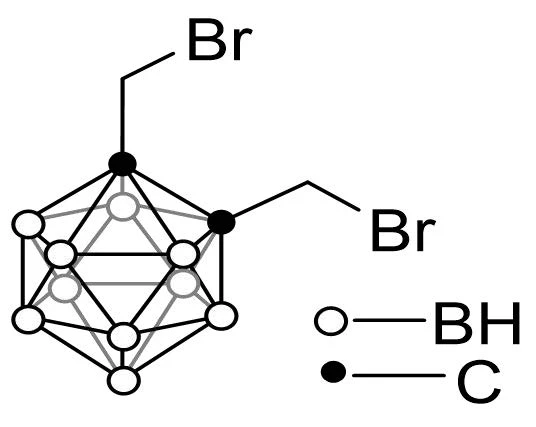
If you're interested in other boron - cluster compounds, you might want to check out some related materials. For instance, Sodium Carbadodecaborate CB11H12Na, 92468 - 38 - 7 is another compound in this family. It has its own unique properties and potential uses. Similarly, 1,2 - Dibromomethyl - 1,2 - dicarbacloso - dodecaborane,C4H4B10Br2,17786 - 09 - 3 and 1,7 - Dicarba - closo - dodecaborane - 1 - acetic Acid,C4H3B10O2,20644 - 65 - 9 are also worth exploring.
As a supplier of Na2B10H10, I can offer high - quality products for your research or industrial needs. Whether you're working on a project related to magnetic materials, chemical synthesis, or something else entirely, Na2B10H10 could be a valuable addition to your toolkit. If you're interested in purchasing Na2B10H10 or have any questions about its properties and applications, don't hesitate to reach out. We can have a detailed discussion about your requirements and see how we can best serve you.
In conclusion, the magnetic properties of Na2B10H10 are mainly characterized by its diamagnetic nature. While this might seem unremarkable at first, it has its own set of potential applications. And if you're in the market for Na2B10H10 or other boron - cluster compounds, I'm here to help you make the right choice.
References:
- "Boron Hydrides and Related Compounds" by N. N. Greenwood and A. Earnshaw.
- Journal articles on boron - cluster compounds and their magnetic properties from leading chemistry journals.