

Hey there! As a supplier of o - Carborane, I've been keeping a close eye on its research and development. In this blog, I'm gonna share with you what I think are the future development trends of o - Carborane research.
1. Advancements in Medicinal Chemistry
One of the most promising areas for o - Carborane research is in medicinal chemistry. Boron neutron capture therapy (BNCT) has long been a hot topic. o - Carborane, with its high boron content, is a key player in BNCT. The idea is that if we can selectively deliver o - Carborane - containing compounds to tumor cells and then expose the patient to thermal neutrons, the boron atoms in o - Carborane will capture the neutrons. This leads to a nuclear reaction that releases high - energy particles, which can kill the tumor cells while minimizing damage to surrounding healthy tissues.
Recent research has focused on improving the targeting ability of o - Carborane - based drugs. Scientists are designing novel carriers and ligands that can specifically bind to receptors on tumor cells. For example, some researchers are attaching o - Carborane to antibodies or peptides that have a high affinity for cancer - specific antigens. This way, the o - Carborane can be more precisely delivered to the tumor site.
Another aspect is the development of more stable and biocompatible o - Carborane derivatives. We know that some o - Carborane compounds may have limited solubility or stability in biological systems. By modifying the structure of o - Carborane, we can enhance its pharmacokinetic properties. For instance, adding hydrophilic groups to o - Carborane can improve its solubility in water, making it easier to administer in the body.
2. Applications in Materials Science
o - Carborane also has a bright future in materials science. Its unique cage - like structure gives it some interesting physical and chemical properties. In the field of polymers, o - Carborane can be incorporated into polymer chains to improve their thermal stability and mechanical strength. For example, when o - Carborane is used as a cross - linking agent in polymers, it can form strong covalent bonds that resist high temperatures and mechanical stress.
In the area of electronic materials, o - Carborane - based compounds are being explored as potential semiconductors or charge - transport materials. The electron - rich nature of o - Carborane allows it to participate in charge transfer processes. Some researchers are working on creating organic light - emitting diodes (OLEDs) with o - Carborane - containing materials. These materials may offer better performance in terms of efficiency and stability compared to traditional organic semiconductors.
Moreover, o - Carborane can be used in the development of high - performance composites. By adding o - Carborane particles to a matrix material, we can enhance the composite's resistance to radiation, oxidation, and chemical corrosion. This makes it suitable for applications in aerospace, nuclear, and other harsh environments.
3. Catalysis
Catalysis is another area where o - Carborane research is making waves. o - Carborane - based catalysts can offer unique reactivity due to the electronic and steric properties of the carborane cage. In organic synthesis, o - Carborane catalysts can be used to promote various reactions, such as C - H activation and coupling reactions.
For example, some o - Carborane - containing transition metal complexes have shown excellent catalytic activity in cross - coupling reactions. These reactions are important for the synthesis of complex organic molecules, including pharmaceuticals and agrochemicals. The carborane cage can influence the electronic environment around the metal center, which in turn affects the catalytic performance.
In addition, o - Carborane catalysts can be used in the field of green chemistry. They can potentially replace some traditional catalysts that are toxic or have low efficiency. By designing more environmentally friendly o - Carborane catalysts, we can reduce the environmental impact of chemical processes.
4. Energy - Related Applications
As the demand for clean and efficient energy sources grows, o - Carborane research is also exploring energy - related applications. In the field of batteries, o - Carborane - based materials are being investigated as potential electrolyte additives or electrode materials.
For lithium - ion batteries, adding o - Carborane derivatives to the electrolyte can improve the battery's performance. The carborane cage can interact with lithium ions and help to form a stable solid - electrolyte interphase (SEI) layer on the electrode surface. This can enhance the battery's cycling stability and reduce self - discharge.
In fuel cells, o - Carborane compounds can be used as catalysts or as part of the membrane - electrode assembly. Their unique chemical properties may enable more efficient fuel oxidation and oxygen reduction reactions, which are crucial for the operation of fuel cells.
Our Offerings
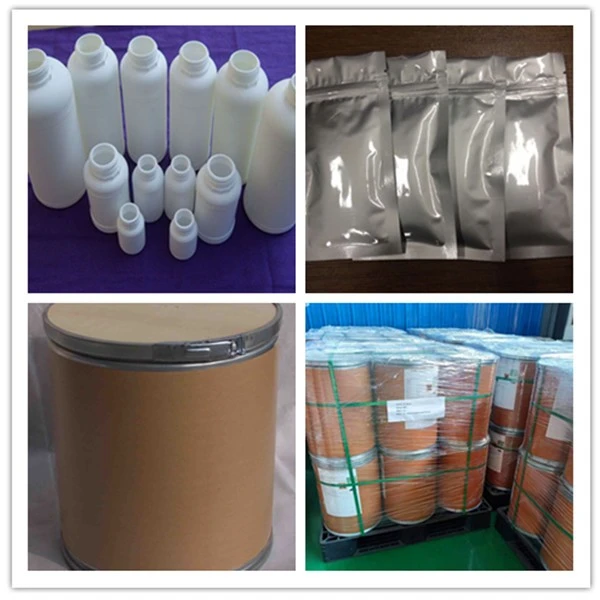
As a supplier of o - Carborane, we have a wide range of products to meet different research and application needs. For example, we offer 1,2-Dicarbadodecaborane(12), 1-(2-propyn-1-yl)-,79366-41-9,C5H3B10, which can be used in various organic synthesis and materials science applications. Our Sodium Carbadodecaborate CB11H12Na, 92468 - 38 - 7 is a valuable compound for boron - related research, especially in BNCT. And 23835 - 95 - 2, B10C4H16O, 1 - Hydroxyethyl - 1,2 - dicarba - closo - Dodecaborane has potential applications in both medicinal and materials chemistry.
If you're involved in o - Carborane research or have a project that requires o - Carborane products, we'd love to hear from you. Whether you need a small quantity for research purposes or a large - scale supply for industrial applications, we can provide high - quality o - Carborane compounds at competitive prices. Just reach out to us to start a procurement discussion. We're here to support your research and development efforts and help you achieve your goals.
References
- "Boron Neutron Capture Therapy: Current Status and Future Prospects" by X. Y. Zhang et al.
- "Carborane - Based Materials for Advanced Applications" by L. Wang et al.
- "Catalytic Applications of Carborane - Containing Compounds" by M. J. Smith et al.
- "Energy - Related Applications of Carborane Compounds" by N. Li et al.