

Hey there! As a supplier of C32H45BrN2O8, I often get asked about the chromatographic separation methods for this compound. So, I thought I'd write this blog to share some insights on the topic.
What is C32H45BrN2O8?
First off, C32H45BrN2O8 is the chemical formula for a specific compound. In fact, it's lappaconitine hydrobromide, which has some important medical applications. If you're interested in top - quality lappaconitine hydrobromide, you can check out this link: Top Quality Lappaconitine Hydrobromide,C32H45BrN2O8,CAS:97792 - 45 - 5.
Why Chromatographic Separation?
Chromatographic separation is crucial for several reasons. When we're dealing with C32H45BrN2O8, it might be present in a mixture with other substances. Separation helps us get a pure form of the compound, which is essential for accurate analysis, quality control, and ensuring its effectiveness in medical or other applications.
Types of Chromatographic Separation Methods for C32H45BrN2O8
High - Performance Liquid Chromatography (HPLC)
HPLC is one of the most commonly used methods for separating C32H45BrN2O8. It works by passing a liquid sample through a column filled with a stationary phase. The different components in the sample interact with the stationary phase to different degrees, causing them to separate as they move through the column.
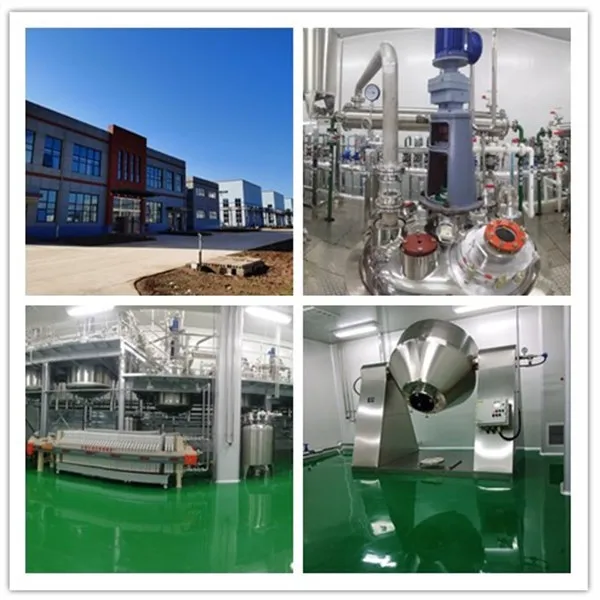

The mobile phase in HPLC can be a mixture of solvents, like water and an organic solvent such as methanol or acetonitrile. By adjusting the composition of the mobile phase, we can control the separation process. For C32H45BrN2O8, the choice of column and mobile phase is crucial. A reversed - phase column is often used, where the stationary phase is non - polar, and the mobile phase is polar. This allows the compound to interact with the column in a way that results in good separation from other components in the mixture.
The advantage of HPLC is its high sensitivity and accuracy. It can detect very small amounts of C32H45BrN2O8 in a sample, making it ideal for quality control in the production process. Also, it's relatively fast compared to some other separation methods.
Thin - Layer Chromatography (TLC)
TLC is a simple and cost - effective method for chromatographic separation. In TLC, a thin layer of adsorbent material, like silica gel, is coated on a plate. The sample is spotted near the bottom of the plate, and then the plate is placed in a developing chamber containing a solvent (the mobile phase).
As the solvent moves up the plate by capillary action, the components in the sample separate based on their affinity for the stationary phase (the adsorbent) and the mobile phase. For C32H45BrN2O8, TLC can be used as a quick screening method. It gives a rough idea of the purity of the compound and whether there are any major impurities present.
The downside of TLC is that it's not as accurate or sensitive as HPLC. It's more of a qualitative method, and it can be difficult to quantify the amount of C32H45BrN2O8 precisely.
Gas Chromatography (GC)
Gas chromatography can also be used for separating C32H45BrN2O8, although it has some limitations. In GC, the sample is vaporized and carried through a column by an inert gas (the mobile phase). The stationary phase is usually a liquid coated on the inside of the column.
However, C32H45BrN2O8 has a relatively high molecular weight and may not be very volatile. This means that it might require special conditions, like high temperatures, to be vaporized for GC analysis. These high temperatures can sometimes cause the compound to decompose, leading to inaccurate results. So, GC is not as commonly used for this compound as HPLC.
Factors Affecting Chromatographic Separation
Temperature
Temperature plays a significant role in chromatographic separation. In HPLC, for example, changing the temperature can affect the viscosity of the mobile phase and the interaction between the sample components and the stationary phase. A higher temperature can sometimes speed up the separation process, but it might also cause changes in the selectivity of the separation.
pH
The pH of the mobile phase can have a big impact on the separation of C32H45BrN2O8. Since the compound has functional groups that can be protonated or deprotonated depending on the pH, adjusting the pH can change its charge and its interaction with the stationary phase. For instance, in HPLC, by carefully controlling the pH of the mobile phase, we can improve the separation of C32H45BrN2O8 from other components.
Flow Rate
In HPLC and GC, the flow rate of the mobile phase is important. A too - high flow rate might not allow enough time for the components to interact properly with the stationary phase, resulting in poor separation. On the other hand, a too - low flow rate can make the separation process very slow.
Other Related Compounds
Apart from C32H45BrN2O8, we also supply other high - quality compounds. For example, if you're interested in good - quality albendazole, you can click on this link: Good Quality Albendazole, CAS: 54965 - 21 - 8, C12H15N3O2S. And for top - grade acyclovir, check out this link: Top Grade Acyclovir, CAS: 59277 - 89 - 3,C8H11N5O3.
Conclusion and Call to Action
Chromatographic separation methods are essential for obtaining pure C32H45BrN2O8. Each method has its own advantages and limitations, and the choice of method depends on various factors such as the nature of the sample, the required accuracy, and the available equipment.
If you're in the market for high - quality C32H45BrN2O8 or any of our other compounds, don't hesitate to reach out for a purchase negotiation. We're here to provide you with the best products and solutions.
References
- Snyder, L. R., Kirkland, J. J., & Glajch, J. L. (2010). Practical HPLC Method Development. John Wiley & Sons.
- McMaster, M. C. (2006). Gas Chromatography and Mass Spectrometry: A Practical Guide. John Wiley & Sons.
- Fried, B., & Sherma, J. (Eds.). (2006). Handbook of Thin - Layer Chromatography. CRC Press.