

Hey there! As a supplier of 9 - Acridone, I often get asked about how to measure its purity. It's a crucial aspect, especially for those who rely on this compound for various applications. In this blog, I'll walk you through some common methods to measure the purity of 9 - Acridone.
Why Purity Matters
Before we dive into the measurement methods, let's quickly talk about why purity is so important. Pure 9 - Acridone ensures consistent performance in different processes. Whether you're using it in research, pharmaceuticals, or chemical synthesis, impurities can mess things up big time. They might affect the reaction rates, alter the properties of the final product, or even cause unwanted side - reactions. So, getting an accurate measure of purity is a must.
Chromatographic Methods
High - Performance Liquid Chromatography (HPLC)
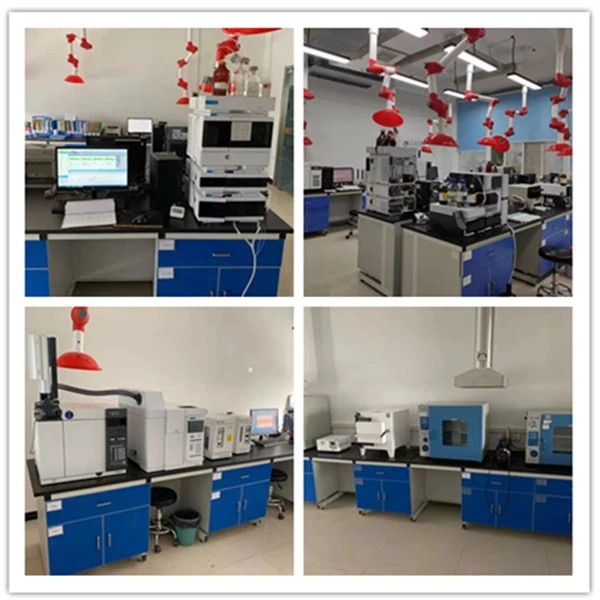
HPLC is one of the most popular methods for measuring the purity of 9 - Acridone. It works by separating the components of a sample based on their interaction with a stationary phase and a mobile phase.
Here's how it goes: First, you dissolve your 9 - Acridone sample in a suitable solvent. Then, you inject it into the HPLC system. The mobile phase, which is usually a mixture of solvents, carries the sample through a column packed with the stationary phase. Different components in the sample will have different affinities for the stationary phase, causing them to move through the column at different speeds.
The detector at the end of the column measures the amount of each component as it elutes. By comparing the peak area of the 9 - Acridone peak to the total peak area of all components in the chromatogram, you can calculate the purity percentage.
One of the great things about HPLC is its high sensitivity. It can detect even trace amounts of impurities. Also, it's relatively fast and can handle a wide range of sample types. However, it requires expensive equipment and trained personnel to operate.
Gas Chromatography (GC)
GC is another chromatographic technique that can be used to measure the purity of 9 - Acridone, especially if the compound is volatile enough. In GC, the sample is vaporized and carried by an inert gas (like helium) through a column.
The separation in GC is based on the differences in the boiling points and vapor pressures of the components in the sample. Similar to HPLC, the detector at the end of the column measures the amount of each component as it elutes.
GC is known for its excellent separation efficiency and high - speed analysis. But it has limitations. 9 - Acridone needs to be volatile or derivatized to make it volatile, which can be a hassle. Also, some impurities might not be detectable by GC.
Spectroscopic Methods
Ultraviolet - Visible (UV - Vis) Spectroscopy
UV - Vis spectroscopy is a simple and quick way to get an idea of the purity of 9 - Acridone. 9 - Acridone has characteristic absorption peaks in the UV - Vis region. By measuring the absorbance of a sample at these specific wavelengths and comparing it to a standard curve of pure 9 - Acridone, you can estimate the concentration and thus the purity.
The principle behind it is the Beer - Lambert law, which states that the absorbance of a solution is proportional to the concentration of the absorbing species. However, UV - Vis spectroscopy has its drawbacks. It can't distinguish between different compounds that absorb at the same wavelengths. So, if there are impurities with similar absorption spectra, it might give inaccurate results.
Nuclear Magnetic Resonance (NMR) Spectroscopy
NMR is a powerful tool for determining the purity of 9 - Acridone. It provides detailed information about the molecular structure and the chemical environment of the atoms in the compound.
When you run an NMR spectrum of a 9 - Acridone sample, you'll see peaks corresponding to different hydrogen or carbon atoms in the molecule. By analyzing the peak intensities and chemical shifts, you can identify the presence of impurities.
For example, if there are extra peaks in the spectrum that don't belong to 9 - Acridone, it indicates the presence of impurities. NMR can also give you information about the relative amounts of different components in the sample. But NMR machines are expensive, and the analysis requires a good understanding of NMR theory.
Melting Point Determination
Melting point determination is a classic method for assessing the purity of a compound. Pure substances have a sharp melting point, while impure substances melt over a range of temperatures.
To measure the melting point of 9 - Acridone, you place a small amount of the sample in a capillary tube and heat it slowly. You record the temperature at which the sample starts to melt and the temperature at which it completely melts.
If the melting point range is narrow and close to the reported melting point of pure 9 - Acridone, it suggests high purity. However, this method has limitations. Some impurities might not affect the melting point significantly, and it can be difficult to get accurate results if the sample is not homogeneous.
Comparison with Standards
Another way to measure the purity of 9 - Acridone is to compare it with a certified reference standard. You can obtain a high - purity reference standard from a reliable source and run it through the same analytical methods as your sample.
By comparing the results, such as the chromatograms from HPLC or the spectra from spectroscopy, you can get a better idea of the purity of your sample. This method helps to account for any variations in the analytical conditions.
Conclusion
Measuring the purity of 9 - Acridone is essential for ensuring its quality and performance. There are several methods available, each with its own advantages and limitations. Depending on your resources, the level of accuracy required, and the nature of the sample, you can choose the most suitable method or a combination of methods.
If you're in the market for high - quality 9 - Acridone, we've got you covered. We also offer related products like C23H22ClNO4, CAS: 674783 - 97 - 2, 9 - Mesityl - 10 - Methylacridinium Perchlorate, Top Grade 9 - Acridinecarboxylic Acid Hydrate, CAS: 332927 - 03 - 4, and Top Grade 10 - Methyl - 9(10H) - acridone C14H11NO, CAS: 719 - 54 - 0. If you're interested in purchasing or have any questions about our products, feel free to reach out for a procurement discussion.
References
- Harris, D. C. (2016). Quantitative Chemical Analysis. W. H. Freeman and Company.
- Skoog, D. A., West, D. M., Holler, F. J., & Crouch, S. R. (2013). Fundamentals of Analytical Chemistry. Brooks/Cole.