

Can 9 - Pa be converted to other pressure units?
As a supplier of products with a pressure specification of 9 Pa, I often encounter inquiries from customers about the conversion of this pressure unit. Pressure is a fundamental physical quantity, and different industries and applications may require the use of various pressure units. In this blog, I will delve into the conversion of 9 Pa to other common pressure units and explain the significance of these conversions.
Understanding the Pascal Unit
The Pascal (Pa) is the SI unit of pressure, named after the French mathematician and physicist Blaise Pascal. One Pascal is defined as one Newton per square meter (N/m²). It represents a relatively small unit of pressure. For instance, the standard atmospheric pressure at sea - level is approximately 101325 Pa. A pressure of 9 Pa is extremely low compared to the atmospheric pressure, which makes it suitable for applications where very precise and low - pressure measurements are required, such as in some high - vacuum systems.
Conversion to Other Pressure Units
1. Conversion to Bar
The bar is a non - SI unit of pressure commonly used in many engineering and meteorological applications. One bar is equal to 100000 Pa. To convert 9 Pa to bar, we use the following formula:
[P_{bar}=\frac{P_{Pa}}{100000}]
Substituting (P_{Pa} = 9) into the formula, we get (P_{bar}=\frac{9}{100000}=9\times10^{- 5}\text{ bar})
This conversion is useful when dealing with pressure gauges or systems that are calibrated in bar. For example, in some industrial processes where pressure is regulated in bar, knowing the equivalent value of 9 Pa in bar helps in setting up the correct operating conditions.
2. Conversion to Millimeter of Mercury (mmHg)
The millimeter of mercury is a unit of pressure based on the height of a column of mercury in a mercury barometer. One standard atmosphere is equivalent to 760 mmHg and 101325 Pa. We can use the following proportion to convert Pa to mmHg:
[\frac{P_{Pa}}{101325}=\frac{P_{mmHg}}{760}]
Solving for (P_{mmHg}) when (P_{Pa}=9), we have:
[P_{mmHg}=\frac{9\times760}{101325}\approx0.067\text{ mmHg}]
This conversion is important in medical applications, such as in measuring blood pressure, and in some scientific experiments where pressure is measured using mercury manometers.
3. Conversion to Pounds per Square Inch (psi)
The pounds per square inch is a unit of pressure commonly used in the United States and some other countries in the context of engineering and automotive applications. One psi is approximately equal to 6894.76 Pa. To convert 9 Pa to psi, we use the formula:
[P_{psi}=\frac{P_{Pa}}{6894.76}]
Substituting (P_{Pa} = 9), we get (P_{psi}=\frac{9}{6894.76}\approx0.0013\text{ psi})
This conversion is useful in industries where equipment is designed and specified using the imperial system of units, such as in the automotive and aerospace industries.
Significance of Conversion in Different Industries
In the semiconductor manufacturing industry, low - pressure environments are crucial for processes like chemical vapor deposition (CVD) and physical vapor deposition (PVD). A pressure of 9 Pa might be required to ensure the proper deposition of thin films on semiconductor wafers. Engineers in this field need to convert this pressure value to units like Torr (a unit similar to mmHg) or mbar (a subunit of bar) to operate the vacuum pumps and other equipment accurately.
In the field of environmental science, when studying air quality in enclosed spaces or the movement of air through filters, low - pressure measurements in Pa are common. Converting these values to other units helps in comparing data with existing standards and research that may be reported in different pressure units.
As a 9 - Pa supplier, we understand the importance of these conversions for our customers. Whether you are working on a high - tech research project or an industrial manufacturing process, having accurate pressure values in the units you need is essential for the success of your work.
We also offer a range of products related to nitrogen - heterocyclic photosensitizers. For example, we have 98% Acridine Hydrochloride C13H10ClN, CAS: 17784 - 47 - 3, Top Purity 9 - Chloroacridine, 9 - chloro - acridine, CAS:1207 - 69 - 8, and 99% Acridone Acetic Acid, 9 - Oxo - 10(9H) - acridineacetic Acid, CAS:38609 - 97 - 1. These products are carefully manufactured to meet the high - quality standards required in various scientific and industrial applications.
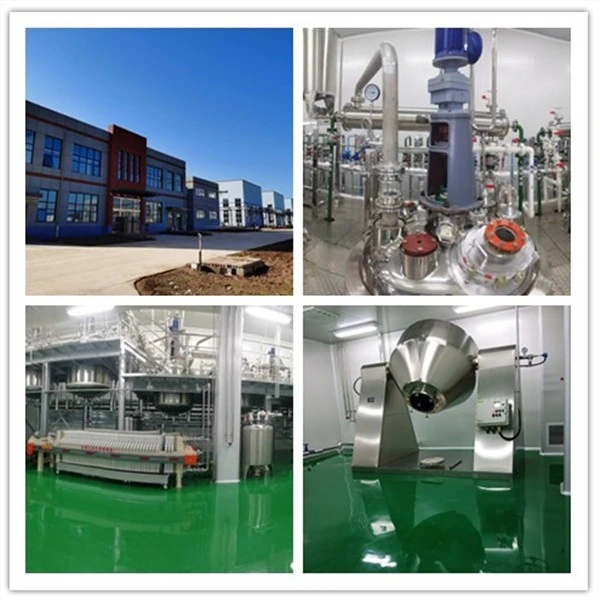
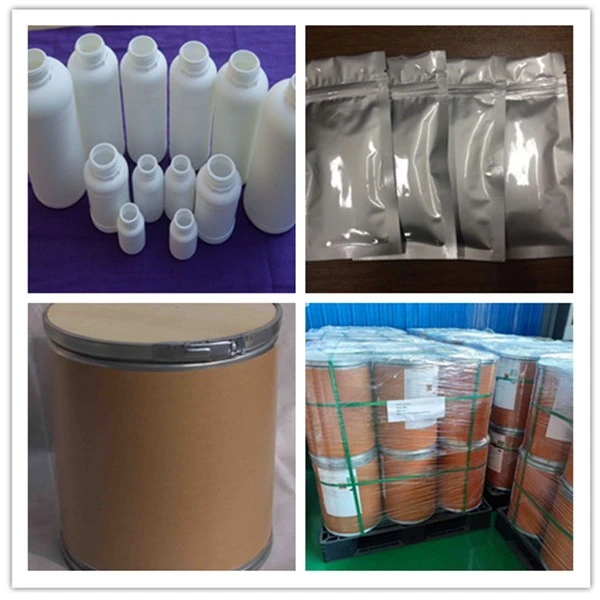
If you are in need of products with a pressure specification of 9 Pa or any of our nitrogen - heterocyclic photosensitizers, we encourage you to reach out to us for procurement and further discussion. We are committed to providing you with the best products and services to meet your specific needs.
References
- Halliday, D., Resnick, R., & Walker, J. (2014). Fundamentals of Physics. Wiley.
- Young, H. D., & Freedman, R. A. (2012). University Physics with Modern Physics. Pearson.